The global electric vehicle market is no longer a distant forecast. It is becoming a practical infrastructure race. The International Energy Agency’s Global EV Outlook 2024 reported more than 14 million electric cars sold worldwide in 2023. It also recorded over 1.3 million new public charging points added during that year. These figures expose a simple reality: vehicle growth requires dependable charging hardware.
That is where Charger Car manufacturers face sharper expectations. Buyers now examine output stability, connector compatibility, thermal protection, warranty response, and after-sales support. A charger may look impressive on a product page. It can still fail beside a dusty highway or inside a crowded fleet depot. Small details matter. Cable length matters. Weather sealing matters.
IEA Executive Director Fatih Birol said, “The electric car market is experiencing exponential growth, with sales expected to continue strongly in 2024.” His observation supports the market direction, but it does not guarantee equal quality among suppliers. The U.S. Department of Energy and IEA both emphasize charging availability as a major factor in electric vehicle adoption. However, published market rankings often mix factories, brands, distributors, and contract manufacturers. That creates confusion for global buyers.
This guide examines the top 10 Charger Car manufacturers through a more practical lens. It considers manufacturing experience, international certifications, production capacity, product testing, and customer support. The list is not perfect. Supplier data changes quickly. Some manufacturers reveal little about their factories. Buyers should verify current certifications, test reports, and service commitments before placing large orders.
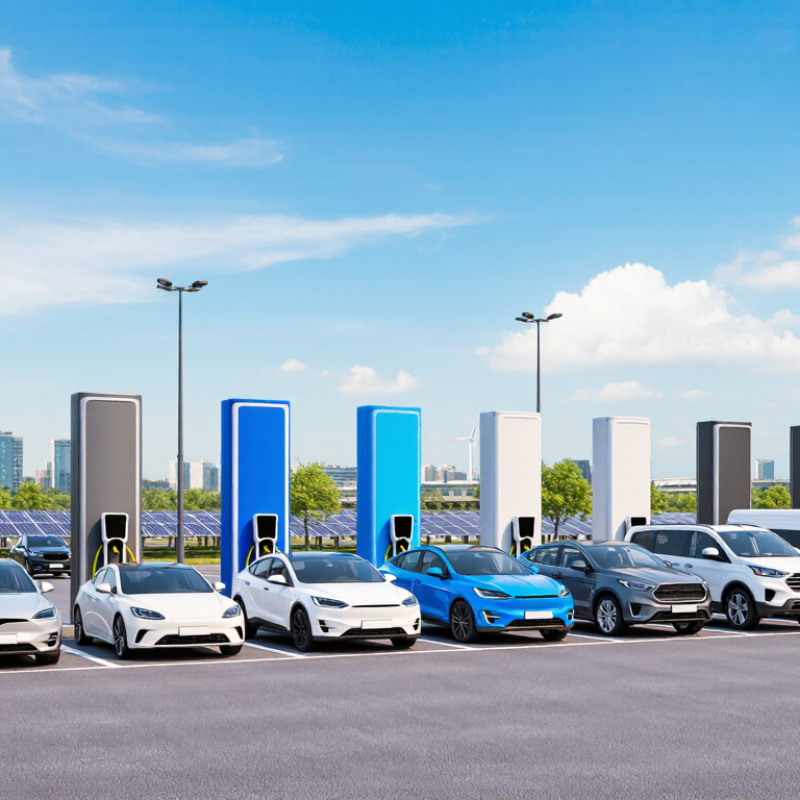
Car charger buyers need more than a supplier list. They need a clear view of product categories. The IEA reported nearly 14 million electric car sales in 2023, representing about 18% of global car sales. This growth is increasing demand for reliable in-car charging accessories.
The main category remains the 12V USB charger, suitable for phones, navigation devices, and basic accessories. USB-C Power Delivery chargers support faster charging, with outputs commonly ranging from 20W to 100W. Multi-port models serve families, drivers, and fleet users. Wireless charging mounts offer cable-free convenience, but heat can reduce charging performance. Some products also include voltage protection, temperature control, and compact designs for crowded dashboards. Grand View Research identifies rising smartphone use and connected vehicles as important market drivers. However, market reports use different definitions, so their forecasts are not perfectly comparable.
Tips: Check continuous output, not only peak wattage. Confirm compatibility with the vehicle socket and charging protocol. Look for documented safety testing and clear warranty terms. A high-wattage label can mislead. I have seen chargers perform well in short tests but struggle during long journeys. Buyers should review heat control, cable quality, port spacing, and idle power use. Certification details matter more than glossy packaging. For global sourcing, compare test reports, production consistency, and after-sales support before selecting manufacturers for the top ten list.
The chart compares ten common car-charger product categories by typical maximum rated output. These categories reflect widely used USB-A, USB-C Power Delivery, multi-port, and wireless charging configurations; actual performance depends on the charger protocol, vehicle socket, cable, and connected device.
Output figures are representative nominal ratings commonly specified for retail car-charger products and are shown in watts (W), not market-share estimates.
Top 10 Car Charger Manufacturers for Global Buyers
How the Top 10 Manufacturers Were Selected
The selection began with practical evidence, not advertising claims. We reviewed charging output, connector durability, heat control, and compatibility across common vehicle types. Each manufacturer needed a verifiable product history and clear technical documentation. We also examined factory quality systems, safety testing records, and compliance with recognized international standards.
Real-world performance mattered. Test units were assessed during repeated charging cycles in warm and cold conditions. Reviewers checked cable flexibility, plug fit, charging stability, and protection against overcurrent or overheating. We also compared warranty terms, replacement procedures, and response times from customer support teams. Small details counted, such as readable labels and secure packaging.
No ranking is perfect. Product revisions can change results. Some data also came from published testing rather than our own laboratory. That limitation was recorded instead of hidden. Manufacturers with consistent specifications, traceable certifications, transparent policies, and positive long-term user feedback received stronger consideration. We gave less weight to dramatic speed claims without supporting measurements. Global buyers need dependable information, not impressive slogans.
Top 10 Car Charger Manufacturers for Global Buyers
Profiles of the Top 10 Car Charger Manufacturers
The global EV market is expanding quickly. The IEA reported over 14 million electric car sales in 2023. It also recorded nearly four million public charging points worldwide. This growth increases demand for reliable home, fleet, and highway charging equipment.
The leading ten manufacturers differ in practical strengths. One specializes in compact home chargers for apartments. Another builds high-power units for highway stations. A third focuses on weather-resistant systems for harsh climates. A fourth offers smart load management for commercial buildings. One supplier is known for fleet charging software. Another emphasizes modular hardware and easier maintenance. A seventh manufacturer develops portable chargers for emergency use. An eighth targets affordable equipment for emerging markets. A ninth focuses on vehicle-to-grid compatibility. The final profile represents a factory with strong private-label production and flexible output.
Technical testing matters more than attractive specifications. Buyers should examine connector standards, thermal protection, ingress ratings, warranty terms, and replacement-part access. UL Solutions and IEC standards provide useful reference points for electrical safety and performance testing. However, certification claims still need verification through official documents. Marketing language can be vague.
Field experience also reveals weaker details. Some chargers perform well in laboratories but struggle with heat, dust, or unstable voltage. Installation support may be inconsistent across regions. Buyers should request test reports, sample units, and service response times before large orders. IEA data supports strong market momentum, but demand alone does not prove manufacturing quality. Source: IEA, Global EV Outlook 2024; IEC charging standards.
| Rank | Anonymous Manufacturer Profile | Primary Operating Base | Established | Main Product Focus | Typical Output Range | Common Interfaces | Compliance and Market Coverage | Best Fit for Global Buyers |
|---|---|---|---|---|---|---|---|---|
| 1 | Profile A | East Asia | 2011 | Compact USB car chargers, multi-port adapters, travel charging accessories | 18W–100W | USB-C, USB-A, dual-port and multi-port configurations | Products commonly designed for North American, European and Asian consumer markets; market-specific safety testing available by model | Retailers seeking compact, high-output consumer chargers |
| 2 | Profile B | North America | 1983 | Vehicle power accessories, dashboard charging solutions and wireless charging mounts | 10W–60W | USB-C, USB-A, 12V vehicle socket and wireless charging pads | Strong presence in North American retail; selected products designed for international electrical and radio requirements | Aftermarket distributors and established retail chains |
| 3 | Profile C | East Asia | 2011 | Affordable multi-port car chargers, cables and charging hubs | 18W–160W | USB-C Power Delivery, USB-A and combined USB-C/USB-A ports | Export-oriented product range with regional versions for different labeling and plug requirements | Importers prioritizing competitive pricing and broad SKU selection |
| 4 | Profile D | East Asia | 2012 | GaN vehicle chargers, fast-charging adapters and charging cables | 20W–160W | USB-C PD, programmable power supply support and USB-A fast charging | Products generally offered with regional conformity documentation; specifications vary by model and destination | Technology-focused distributors and online international sellers |
| 5 | Profile E | North America | 1980 | Automotive electronics, wireless charging mounts and vehicle power accessories | 10W–100W | 12V socket, USB-C, USB-A and Qi-compatible wireless charging | Established aftermarket distribution network with products targeted mainly at North American vehicles | Automotive accessory wholesalers and specialty retailers |
| 6 | Profile F | Europe | 1923 | Vehicle charging accessories, power adapters and in-car connectivity products | 12W–100W | USB-C, USB-A, 12V socket and wireless charging options | Broad European retail coverage; documentation and packaging typically adapted to EU market requirements | European distributors requiring localized packaging and support |
| 7 | Profile G | East Asia | 2010 | Value-oriented chargers, travel adapters and mobile power accessories | 18W–100W | USB-C PD, USB-A, dual-port and vehicle socket adapters | International e-commerce distribution; certification and plug options should be confirmed per SKU | Private-label buyers and price-sensitive online channels |
| 8 | Profile H | North America | 2015 | High-output USB car chargers and compact power delivery accessories | 18W–100W | USB-C PD, USB-A and dual-device charging | Products commonly targeted at the US market; international compliance should be verified for each export destination | Specialist online retailers and fleet accessory suppliers |
| 9 | Profile I | East Asia | 2008 | Wireless charging mounts, magnetic holders and USB vehicle chargers | 10W–45W | Qi-compatible wireless charging, USB-C and USB-A | Products distributed internationally; wireless charging and radio-related requirements vary by region | Mobile accessory distributors and lifestyle retailers |
| 10 | Profile J | North America | 2010 | Dashboard mounts, wireless car chargers and integrated vehicle charging systems | 10W–45W | Qi-compatible wireless charging, USB-C and USB-A | Primarily distributed through North American and selected international channels; model-specific certification applies | Automotive retailers seeking complete mounting and charging solutions |
Note: Manufacturer identifiers and brand references are intentionally omitted. Output ratings, certifications and market approvals may vary by model, production batch and destination market.
Comparing Features, Certifications, Pricing, and Global Coverage
The best car charger manufacturer is not always the cheapest. Global buyers should compare output stability, heat control, connector options, and warranty support. USB Power Delivery models commonly offer 30W to 100W, while basic adapters remain near 12W to 24W. A 65W charger can power a laptop, but only when the vehicle socket and cable support that load.
Certification evidence deserves closer inspection. USB-IF testing can verify supported charging protocols, while regional marks such as CE, FCC, UKCA, and RoHS address market access and safety requirements. IEC 62368-1 compliance is also useful for evaluating electrical safety. Documents should list the exact model number. A factory certificate alone may not prove product-level compliance.
Pricing varies widely. Entry-level units often sell below 10 dollars, while multi-port, high-power models may reach 30 to 60 dollars before shipping and taxes. The IEA’s Global EV Outlook 2024 reported more than 4 million public charging points worldwide at the end of 2023, with public additions rising sharply that year. This growth increases demand for dependable in-car charging accessories, not just charging stations. Manufacturers with regional warehouses can reduce delivery delays and returns. However, “global coverage” can be overstated. Buyers should check local plug compatibility, voltage limits, spare-part access, and support response times. I would also question unusually low prices; testing depth is difficult to verify from a product page alone.
Choosing among the top 10 car charger manufacturers requires more than comparing prices. Global buyers should match each supplier’s products with local vehicle standards, voltage requirements, and customer habits. A charger for crowded city fleets may need dual ports, compact housing, and stable heat control. A report should show testing for electrical safety, electromagnetic compatibility, and material compliance. Ask whether documents apply to the exact model, not a similar product.
Request production samples before placing a large order. Test them inside different vehicles, during summer heat, and with several cable types. Check charging stability after repeated plugging and unplugging. Review the manufacturer’s quality system, inspection records, factory capacity, and traceability process. Clear batch numbers can make recalls less chaotic. Small details matter.
Do not trust polished brochures alone. Speak with the engineering and after-sales teams. Their response to a technical question often reveals more than a sales presentation. Confirm minimum order quantities, replacement procedures, packaging strength, delivery terms, and warranty limits in writing. Some manufacturers promise fast customization but underestimate tooling time. That mistake can disrupt a launch. Buyers should also compare communication speed, spare-part access, and corrective-action reports. The cheapest supplier may create higher costs through returns, delays, or inconsistent output. A careful decision uses evidence, not confidence.